
How Much Does a Business Security Camera System Cost in Cincinnati, OH?
Business Security Camera System Cost Cincinnati OH
Security is no longer optional for Cincinnati businesses. Whether you run a small storefront, manage a warehouse, oversee rental properties, or operate a large commercial facility, knowing what’s happening on your property—day or night—matters more than ever.
A reliable business security camera system helps protect employees, reduce theft, document incidents, and give you the visibility to run your operation confidently. But the biggest question business owners have is usually the same: How much does a commercial security camera system cost in Cincinnati in 2025 and beyond?
While every business is different, most pricing comes down to three main elements:
- The number of cameras
- The type of equipment you choose
- The complexity of installation
If you’re planning to upgrade your security or install cameras for the first time, this guide will help you decide which cameras to get and how much to prepare.
Book Your On-Site Security Assessment
Table Of Contents:
Instead of vague pricing or confusing technical explanations, we’ll walk you through the real cost expectations based on the Cincinnati market in 2025 and beyond.
Click below to jump to the section you want to read.
1. Average Business Security Camera System Cost in 2025 and Beyond
2. Key Factors That Affect Security Camera System Costs
3. Commercial Security Camera System Options
4. Additional Business Security Costs and Add-Ons
6. Cost Of Installation in Cincinnati, OH
8. Can You Write Off Security Cameras for Business?
Average Business Security Camera System Cost in 2025
Our goal is simple. That is to help Cincinnati business owners understand what they should realistically budget, what their options are, and how to choose a system that fits their needs.
For a medium-sized Cincinnati business (10-20 cameras), expect to budget:
1. Entry-level commercial system
$5,000-$9,000
2. Mid-range system with advanced features
$9,000-$18,000
3. High-end enterprise
system
$18,000-$50,000+
What is the Average Cost of Installing Security Cameras?
Most Cincinnati businesses invest between $1,200 and $15,000+ for a complete business security camera system. Small offices with 2 to 4 cameras typically fall on the lower end, while large facilities with multiple buildings or advanced features will be higher.
This range usually includes:
- Cameras
- Cables
- Recording equipment (NVR/DVR)
- Power and networking hardware
- Labor and installation
- Setup and configuration
- Basic system training
What is the Cost of CCTV Installation?
Traditional analog CCTV systems tend to be less expensive upfront. A 4-camera analog system with DVR might cost $1,500 to $2,000 installed. However, analog technology offers lower resolution, fewer advanced features, and higher maintenance costs compared to modern IP camera systems.
IP-based camera systems, while more expensive initially ($2,000 to $3,500 for a comparable 4-camera setup), provide superior image quality, advanced analytics, and integration with other business systems.
How Much is a Commercial CCTV System?
Commercial-grade systems differ significantly, and a true commercial CCTV system for a business typically starts around $1,200 and can easily reach $15,000-$100,000 for larger installations.
In Cincinnati, OH, professional security camera installation typically costs $300 to $500 per camera for simple setups and $500 to $650+ per camera for advanced or difficult installations.
Here’s a better breakdown of average camera installation costs by business type:
- Small retail stores (4-6 cameras): $1,500-$3,200
- Restaurants and bars (6-10 cameras): $2,800-$5,500
- Small offices (4-8 cameras): $1,800-$4,000
- Warehouses and distribution (8-16 cameras): $4,500-$12,000
- Large retail or multi-location (16+ cameras): $10,000-$50,000+
The distinction also matters because commercial cameras are built to operate 24/7/365, withstand harsh conditions, provide legal-grade evidence quality, and supply high quality color video in low-light conditions.
Typical Price Ranges: Entry-Level to Advanced Commercial Systems
Here’s a detailed overview of the typical price ranges businesses in Cincinnati can expect in 2025 and beyond, supported by real local examples.
Entry-Level Systems ($1,200-$3,500)
Entry-level packages work well for small businesses that have simple security needs. These systems usually have 4-6 cameras with 1080p resolution and basic night vision. They also typically come with a basic DVR and regular installation services.
Mid-Range Systems ($3,500-$10,000)
This is the sweet spot for many Cincinnati businesses, including 6-12 cameras with 2K-4K resolution, enhanced low-light performance, an NVR with substantial storage, professional-grade cameras with weatherproofing, mobile app access, motion detection, and email alerts.
Advanced Systems ($10,000-$25,000)
For bigger places or those needing extra security, advanced systems come with 12-24+ high-res cameras and smart features like counting people, recognizing license plates, and detecting faces. These systems sometimes integrate with current access control and alarm systems.
Enterprise Systems ($25,000-$100,000)
Enterprise packages come with backup systems, failover protections, and dedicated support contracts. These systems can handle unlimited cameras, allow centralized management across locations, and integrate with business tools. These systems will also need good planning and expert design.
Key Factors That Affect Security Camera System Costs
To make smart decisions and avoid overspending, it helps to understand the main cost drivers. Below are the factors that most influence system pricing for Cincinnati businesses.
1. System Size, Number of Cameras, and Installation Complexity
One of the biggest cost drivers is how many cameras your business needs. More cameras mean higher equipment cost, more installation labor, and additional storage capacity.
However, the cost per camera usually becomes more affordable as the system grows because infrastructure, servers, and networking can be shared.
Coverage needs vary widely based on:
- Size of the building
- Number of entrances and exits
- Outdoor spaces
- Parking lots
- Warehouses or aisles
- Multiple floors or buildings
Cincinnati also has a mix of old and new commercial buildings, which affects the difficulty of installing wiring. Some buildings are easy to work in, while others require more preparation and specialized equipment.
Factors that can increase labor and installation cost include:
- Older structures that need custom wiring
- Multiple floors or detached buildings
- Long cable runs
- Integrating into an existing server rack
- Drilling through concrete, brick, or steel
- After-hours installation
2. Brand, Technology, and Resolution
Camera brands range from budget to premium, and prices follow suit. Budget brands may cost 30–50% less but may fall short in reliability or clarity, especially in large commercial environments. While major commercial brands can cost more up front, they often deliver:
- Better image quality
- More reliable performance
- Longer lifespan
- Stronger warranties
The quality of your camera is also directly related to its price and what it can do:
- 1080p (2MP): This is the standard for budget systems. It's good enough for general surveillance where face recognition isn't necessary. Cost-effective, but not very detailed from far away.
- 2K/3MP-4MP: This is a good compromise that gives you more information than 1080p without taking up as much space as 4K. A great deal for most businesses in Cincinnati.
- 4K (8MP): More detailed images make it easier to recognize things from farther away, and digital zooming during playback doesn't hurt the quality much. Ideal for big areas or important monitoring points. With this technology becoming more affordable over time, the large majority of cameras we sell are 4K or better!
- Beyond 4K: 12MP, 16MP, and even higher resolutions are becoming increasingly common, especially in multi-lens panoramic cameras. Higher qualities may be necessary for certain industries like airports, casinos, and stadiums, but they are very expensive.
Which CCTV Camera is Better: WiFi, Wired, or Wireless?
1. Wired cameras use Power over Ethernet (PoE) to get both power and data through one cable. This setup offers:
Reliability: No interference and consistent performance.
Security: Reduced risk of hacking due to a physical connection.
Low Maintenance: No battery upkeep needed.
However, installation needs cables run to each camera, which raises labor costs, especially in finished buildings.
2. WiFi cameras get rid of the need for data cables, but they usually still need power hookups. They provide:
Flexibility: Easier installation process and repositioning, often where the WiFi signal is strong.
Installation Ease: Ideal for hard-to-wire areas. Easily mount them anywhere.
Affordability: DIY WiFi cameras are often much less expensive than a professionally installed commercial system.
But they come with challenges, including interference and security risks. This is susceptible to wireless signal interference and bandwidth issues that can slow down networks. Plus, there is a greater risk if not properly secured.
3. Wireless cameras operate on battery or solar power. They are great for keeping an eye on some parts of your property. They are also perfect for:
Monitoring Remote Areas: Ideal for locations without power access.
Temporary Video Surveillance Systems: Great for events or short-term installations.
Higher Costs: Solar panels and batteries can be expensive, and these cameras often require a cell connection with a monthly charge.
However, the batteries often need charging or replacement. Video quality may also decrease to conserve power, and recording could be limited to motion-triggered clips. Plus, the cold weather can significantly impact battery life and influence its video performance.
Our Thoughts: For businesses in Cincinnati, wired PoE systems are still the best choice. The higher installation costs pay off in reliability and performance. WiFi cameras can still be used but are best for temporary setups, hard-to-wire spots, or cases where running cables is too costly.
Which Is Better—3K or 4K CCTV?
Choosing between 3K (about 5MP) and 4K (8MP) resolution depends on image quality, storage needs, and budget.
4K Advantages:
- Exceptional detail for recognizing faces, license plates, and fine features.
- Allows digital zoom during playback while retaining clarity.
- Performs better in large spaces where cameras are far from subjects.
- Becoming standard as technology advances and prices drop.
3K Advantages:
- Offers significant improvement over 1080p at a lower cost than 4K.
- Reduces storage needs by 30-40% compared to 4K.
- Suitable for most business security applications.
- Better low-light performance than some 4K cameras due to larger pixels.
Our Thoughts:
For most businesses in Cincinnati, 4K resolution provides professional image quality without heavy storage demands. And we recommend considering 4K for critical areas that need clear identification.
Which Is Better—a 2.8 mm or a 3.6 mm CCTV Camera?
This question covers lens focal length. It affects the camera's field of view and identification range. Knowing this helps avoid a common mistake: buying cameras that either miss a wide area or lack detail for clear identification.
2.8 mm Lenses:
- Offer a wider field of view (100-110 degrees).
- Ideal for monitoring large areas like parking lots or retail floors.
- Facial detail degrades beyond 15-20 feet.
3.6 mm Lenses:
- Narrower field of view (80-90 degrees).
- Extend the useful identification range to 25-30 feet.
- Better for monitoring specific areas like entrances or checkout counters.
Our Thoughts:
The best approach is to use different lenses for different purposes. 2.8 mm to cover large areas and 3.6 mm (or longer) for choke spots and areas that need to be identified. For many installations in Cincinnati, using different focal lengths for each camera is helpful.
3. Special and Additional Features
Modern security cameras offer many features beyond basic recording, affecting system costs:
- Remote Access: Available on most systems, even budget ones. This feature allows business owners to manage multiple locations or travel easily.
- Motion Detection and Alerts: Options range from simple pixel-change detection, which can cause false alarms, to advanced AI detection that identifies people, vehicles, and animals. Advanced analytics cost an extra $50-$200 per camera and greatly reduce false alerts.
- Night Vision: Most cameras include night vision, but the quality varies. Budget models may offer grainy images up to 20 feet, while premium options provide clear color images in near-darkness up to 100 feet.
- Video Analytics: These advanced features include:
- People counting for retail analysis
- License plate recognition for parking management
- Facial recognition for access control
- Heat mapping to understand customer behavior
- Perimeter detection with virtual tripwires.
These features can add $100-$500 per camera, turning security cameras into business intelligence tools.
4. Local Building Codes and Compliance
Some Cincinnati businesses must meet additional regulations, which can increase planning and system costs. These include:
- National Electrical Code (NEC): The NEC has been adopted by most municipalities in the Cincinnati area as the governing electrical code. It details the minimum requirements for safe low-voltage installations.
- BICSI Standards: BICSI is recognized worldwide as the pre-eminent standards-writing organization for information and communication technology (ICT). It is crucial that businesses select security dealers who are trained on BICSI standards for ICT design and installation.
- Privacy Considerations: Ohio allows one-party consent for recordings, but video surveillance in private areas must be handled carefully. Proper signage and design are essential for compliance.
- Industry-Specific Requirements: Some businesses also face additional regulations:
- Liquor license holders must keep recordings for specific timeframes.
- Healthcare facilities that need to consider HIPAA rules.
- Financial institutions that need to follow unique security standards.
- Insurance Requirements: Many commercial policies require specific security measures. Insurers may dictate optimal camera placements, recording retention, or system capabilities.
Working with experienced Cincinnati installers, like Security Cameras of Cincinnati, who are familiar with local codes and industry standards, is an important consideration in your decision-making process. We ensure compliance and help you avoid costly mistakes.
Commercial Security Camera System Options
Choosing a security camera system can be tough for Cincinnati businesses. This is because there are many brands and options to consider. But you can always start with the type of security package that you need.
Package Types: Bundled vs. Custom
Security camera systems are typically sold through two approaches, each with distinct advantages:
Bundled Packages
- Includes all you need for installation: cameras (4, 8, or 16), a recording device, cables, power supplies, and sometimes mounting hardware.
- Offers simplicity and guaranteed compatibility.
- Often more affordable than buying parts separately.
- Best for straightforward installations where standard specifications suffice.
Limitations: Less flexible; you may receive cameras with features that don't perfectly meet your needs.
Custom Systems
- Tailored for your specific facility.
- Allows selection of individual components that match your requirements.
- Mixes camera types: wide-angle for parking lots, telephoto for entrances, and PTZ for large areas.
- Scalable to grow with your business.
Limitations:
Typically, it is more expensive due to design costs and higher per-camera prices.
What is the Best Commercial Security Camera System?
There’s no one-size-fits-all solution. But top commercial security camera systems share several key features:
● Reliability: Designed for continuous operation with backup power and weatherproofing.
● Scalability: Grows with your business without needing a complete system replacement.
● Integration: Works with access control, alarms, and point-of-sale systems.
● Professional Support: Responsive technical assistance and regular updates.
● Image Quality: High resolution and low-light performance to meet identification needs.
Which CCTV Is Best for Business?
Choosing the right CCTV technology depends on your business type and security needs. But the best CCTV should be tailored to your specific operational needs:
● For Retail: High-resolution cameras at registers and entrances, wide-angle cameras for sales floors, and people-counting analytics.
● For Restaurants and Bars: Low-light performance, coverage of entry points, parking lot surveillance, and point-of-sale integration.
● For Warehouses: Wide-area coverage, license plate recognition, perimeter detection, and inventory system integration.
● For Professional Offices: Discreet designs, access control integration, and after-hours monitoring.
● For Mixed-Use Buildings: Centralized management, separate tenant access, and reliable long-term systems.
Which is the No. 1 Security Camera Brand?
Several leading manufacturers excel in different areas. When choosing a CCTV brand, you should also think about specifications, local support, and integration.
● Axis Communications: Known for innovation and image quality; premium prices but professional performance.
● Hikvision: Offers competitive pricing and a broad product line suitable for various budgets.
● Hanwha (formerly Samsung): Strong in build quality and integration capabilities.
● Dahua: Competitive prices with a wide range of products.
● Uniview: Delivers near-premium performance at mid-range prices.
● Milestone: Leads in video management software for unified systems.
Selecting the "best" brand depends on your unique circumstances. But the best brand should meet your performance requirements, fit your budget, and built for longer service.
Additional Business Security Costs and Add-Ons
Camera system installation is just one part of your security investment. But knowing extra costs and add-ons helps you budget effectively.
Professional Monitoring Services
This service includes full-service security operations centers that actively monitor your cameras 24/7. Services in Cincinnati typically cost:
- Video verification (monitoring center reviews footage when alarms trigger): $50-$100/month
- Active video monitoring (personnel watch cameras in real-time): $100-$500+/month depending on coverage hours
Smart Integration
Smart integration connects your security cameras with other business systems. Options include point-of-sale systems (for transaction verification), access control (for unified security management), building automation (for lights, HVAC, and door locks), and business intelligence platforms (for customer analytics).
Integration typically adds $500-$3,000+ to the cost, depending on complexity. Often, these systems need to be purchased and installed by the same dealer to be compatible.
Cloud Storage
Many Cincinnati businesses use hybrid approaches with local recording for everyday access and cloud backup for critical cameras or extended retention periods.
But cloud storage provides off-site backup, protecting footage even if your local recording device is damaged or stolen.
Cloud storage costs vary based on camera count and retention period:
- 7-day retention: $5-$6/camera/month
- 30-day retention: $6-$9/camera/month
- 90-day retention: $8-$12/camera/month
Alarm Systems and Sensors
Beyond intrusion detection, additional costs can also include environmental monitoring that protects against non-security threats.
- Water/flood sensors: $50-$150 each.
- Temperature monitoring: $100-$300.
- Carbon monoxide detectors: $75-$200 installed.
- Glass break detectors: $100-$200 each.
Cost of Installation in Cincinnati, OH
The cost of installing security cameras and systems in Cincinnati varies based on your building, system type, and complexity. Here’s what you need to know to budget smartly.
Local Labor Rates
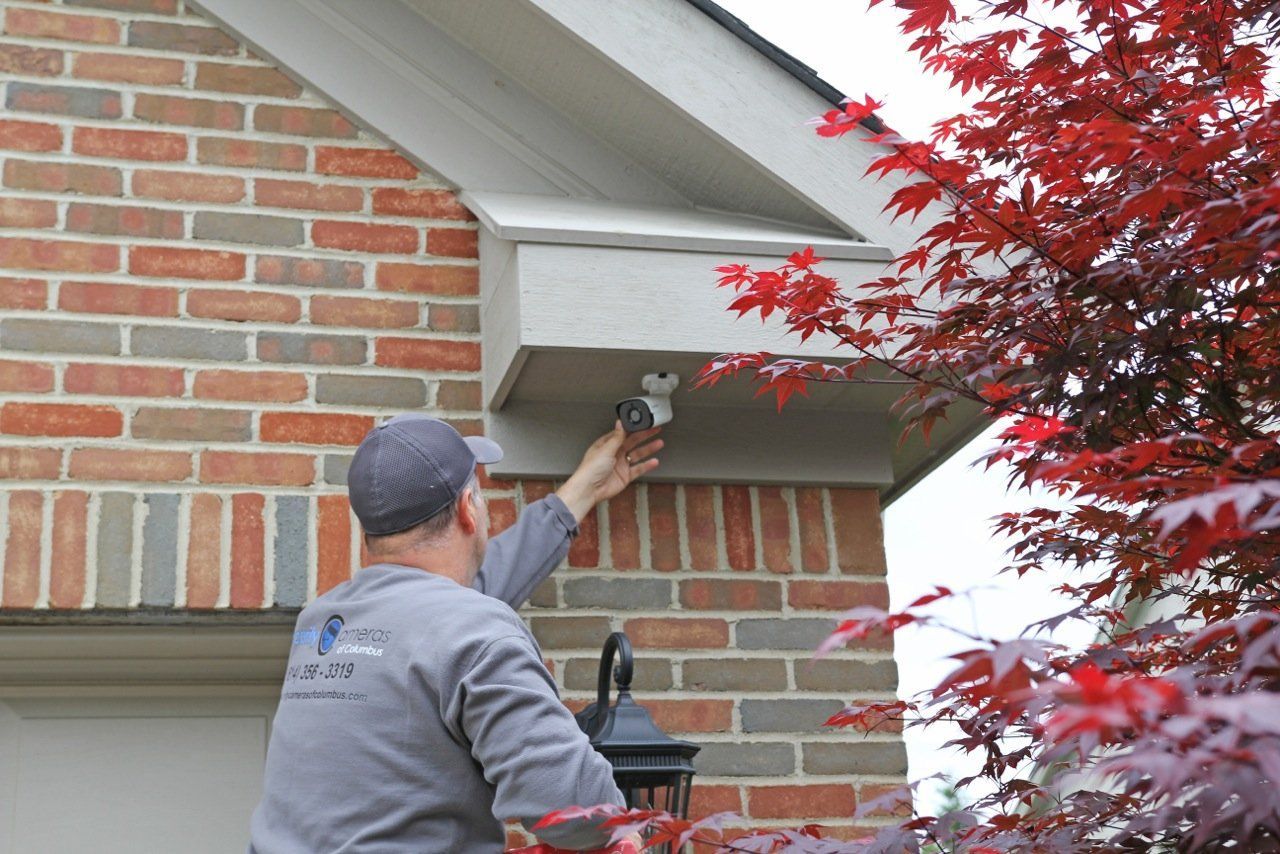
Professional installation rates in Cincinnati range from $75–$150/hour, depending on experience and project complexity. A typical small business system (4–12 cameras) usually takes 8–24 hours, totaling $600–$3,600.
Labor covers more than just mounting cameras: system design, equipment setup, network integration, user training, and post-installation support. Experienced installers often justify higher rates with faster, more reliable results.
Site Complexity
Straightforward installations average $100–$150 per camera, while complex sites can reach $300–$500 per camera. However, site-specific challenges can affect costs. Complex layouts, historic buildings, conduit installation, or high-security requirements can increase costs 30–50%.
What is the Cost of Installing a Security Camera?
Per-camera installation costs depend heavily on whether you're installing a completely new system or adding cameras to an existing system:
- New system installation: $300-$700 per camera, including proportional share of recording equipment, system configuration, network setup, and user training.
- Adding to existing system: $200-$300 per camera since the recording infrastructure, network, and initial configuration already exist.
Installation complexity also drives per-camera costs:
- Simple wall-mounted interior cameras: $75-$150 labor per camera
- Exterior weatherproof cameras: $125-$250 labor per camera
- High-mounted or hard-to-reach locations: $200-$400 labor per camera
- PTZ or specialty cameras: $250-$500 labor per camera
Cincinnati businesses should ask for clear quotes that break down costs for each camera, installation, recording gear, and system setup separately. This clarity helps you decide which cameras you really need and where you can cut costs if necessary.
How Much to Install 4 CCTV Cameras?
For a typical installation of four CCTV cameras in a small Cincinnati business, the total cost ranges from $1,500 to $3,000. Here’s a breakdown:
Equipment Costs: $600-$1,400
- Four cameras ($100-$250 each)
- Four-channel DVR or NVR ($200-$400)Cabling and connectors ($100-$200)
- Mounting hardware ($50-$100)
- Power supplies ($50-$100 if not using PoE)
Installation Labor: $400-$1,000
Miscellaneous:
$100-$200
This estimate assumes a straightforward installation in a typical commercial building. Costs may increase by 30-50% for historic buildings or complex layouts.

Pricing Comparison
Cincinnati's security camera costs are lower than those in Columbus and Cleveland. This is because the market is more competitive here. Here's a comparison of 8-camera system installation costs across Ohio markets:
- Cincinnati: $2,800-$4,500
- Columbus: $3,000-$5,000 (10-15% higher labor rates)
- Cleveland: $3,200-$5,200 (similar to Columbus)
- Dayton: $2,500-$4,200 (similar to Cincinnati)
- Toledo: $2,600-$4,400 (middle of Ohio range)
Our take? Don't choose an installer based on the lowest price. A quality installation affects long-term system reliability and performance. And getting your system installed by skilled Cincinnati pros gives you great value. This easily outweighs the small extra cost compared to budget installers.
Practical FAQs for Business Owners
Cincinnati business owners often have the same practical questions about security camera systems. Here are the answers to your common questions.
Can You Write Off Security Cameras for Business?
Security camera systems are a cost for your business but knowing how they affect your taxes can help you get the most out of your investment.
Can I Claim a Camera as a Business Expense?
Yes, security cameras and systems are generally tax-deductible because they protect business assets and provide necessary security. This includes cameras, recording equipment, installation, and ongoing monitoring fees. Smaller purchases (under $2,500) can usually be deducted fully in the year of purchase, while larger systems are typically depreciated over 5–7 years.
What About Section 179 and Bonus Depreciation?
Section 179 allows businesses to deduct the full purchase price of qualifying equipment in the year it’s bought, making it ideal for larger systems. Bonus depreciation can add additional first-year deductions when combined with Section 179. Ongoing costs like maintenance, cloud storage, and repairs are fully deductible in the year incurred.
Local and Federal Tax Guidance, Implications, and Strategies
Security camera systems offer both security and financial advantages, making them a smart investment for Cincinnati businesses.
Small systems can benefit from immediate deductions, while larger systems often maximize savings using Section 179 and bonus depreciation. Ohio generally follows federal rules, but local nuances exist.
Proper documentation of invoices, payments, installation contracts, and business purposes is essential, and consulting a qualified accountant ensures you maximize tax benefits while staying compliant.
Choosing the Right System for Your Cincinnati Business
To choose and set up the right security camera system, you need to think about technology requirements, your budget, and the needs of your business.
However, results are much better when you work with skilled security professionals in Cincinnati, OH.
Assess Your Needs
Look at your space, security risks, and key areas to monitor. Decide on the types of cameras and whether you need integration with existing systems.
Set Your Budget
Determine how much you’re willing to spend on equipment, installation, and ongoing maintenance. This helps balance features with cost.
Work with Experts
Partner with experienced local professionals who can recommend the right cameras, handle installation, ensure compliance, and provide support as your business grows.
Why Work with Security Cameras of Cincinnati
At Security Cameras of Cincinnati, we put your business’s safety and peace of mind first. We know that no two businesses are alike, and we work closely with you to design a security system that fits your space, operations, and budget.
We Have Local Expertise in Commercial Security Systems
We understand that your business security needs are unique. That’s why we design and install systems tailored to your space and operations, whether you run a retail store, restaurant, warehouse, or office.
We guarantee your cameras monitor the right spots. They function well in low-light and harsh conditions. As your business grows, we plan your system to scale with you; adding cameras or expanding capabilities is easy and hassle-free.

We are Transparent in Pricing and Ongoing Support
We believe in clear, upfront pricing so you always know what you’re investing in. Our quotes include equipment, installation, permits, configuration, and warranties, meaning no hidden fees.
Once your system is running, we support you with troubleshooting, maintenance, firmware updates, and advice to optimize or expand your security.
Our security camera installation and system services ensure we stand behind our work. We're always here when you need us
We Offer Customized Solutions for Every Business Size
No two businesses are the same, and your security system should reflect that. We offer small businesses scalable solutions that protect your assets. They’re simple and effective, with no extra complexity.
Mid-sized businesses benefit from multi-location support, integrated systems, and professional-grade reliability. For large enterprises, we deliver centralized management, advanced analytics, redundancy, and dedicated support.
No matter your size, we offer enterprise-level expertise. And our personal, hands-on approach keeps your business secure.
Final Thoughts
As we move through 2025 and into 2026, security camera technology continues advancing while costs remain accessible for Cincinnati businesses of all sizes.
From AI-powered analytics to hybrid cloud-local setups, modern cameras do more than record. They help you monitor, analyze, and protect your business efficiently.
DIY installation also may seem tempting, but professional design and setup ensure your cameras capture the right areas, your network handles video traffic, and your system scales as your business grows.
With reliable installation and ongoing support, it prevents downtime, reduces maintenance issues, and provides the peace of mind that your investment is truly safeguarding your business.
Get a Free Quote from Security Cameras of Cincinnati Today!
At Security Cameras of Cincinnati, we make it easy for you to get the right security camera system for your needs. Our team provides free, no-obligation consultations, detailed quotes with transparent pricing, and expert guidance tailored to your facility, budget, and goals.
From small startups to large enterprises, we bring local expertise, professional-grade equipment, and ongoing support to keep your system running reliably for years.
Don’t leave your security to chance. Contact us today, and let’s build the right system together.